
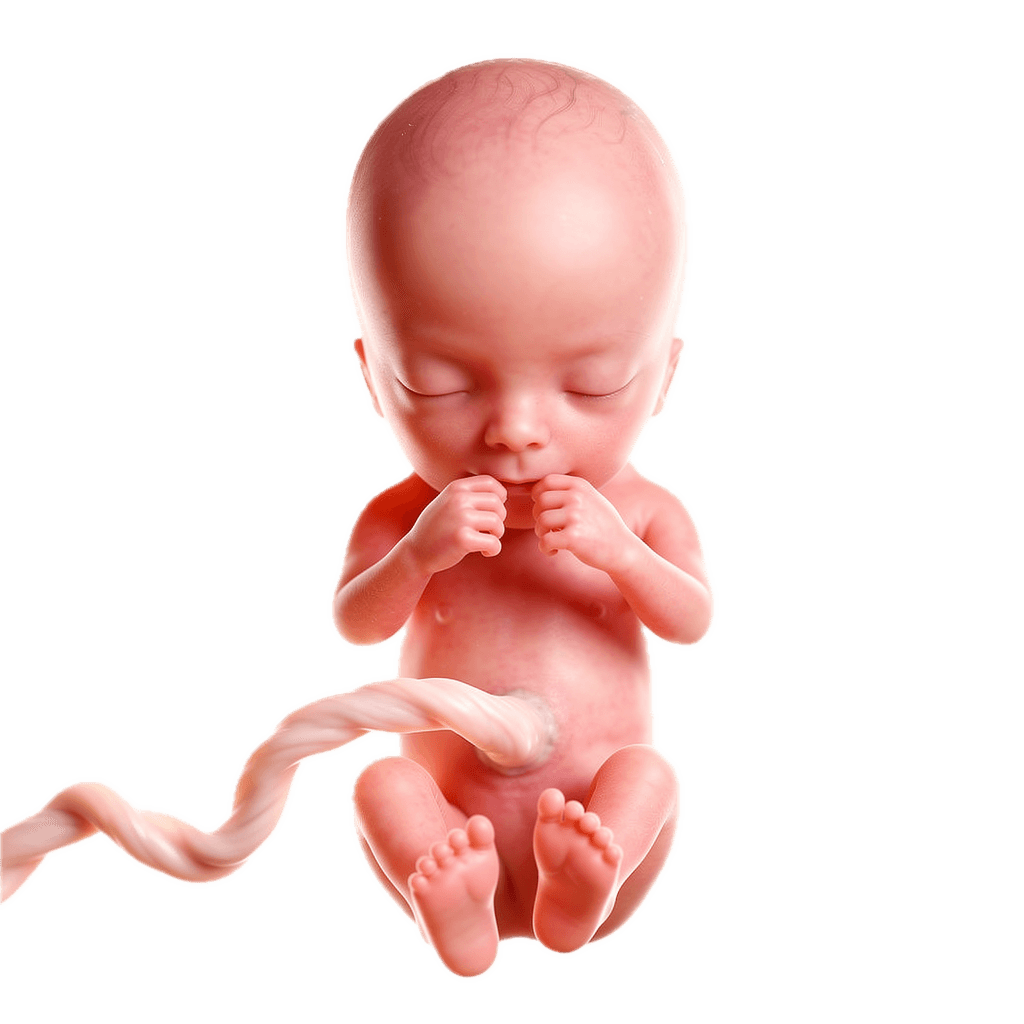

8 Weeks Pregnant
Your baby is the size of a raspberry
0.6 in
Baby Development
This is a landmark week. All of your baby's major organs and body systems, from the heart and lungs to the liver and kidneys, are now in place and continuing to develop. The hands and feet have web-like structures, and the fingers and toes are beginning to separate. The eyes are visible, and the ears are forming both internally and externally.
The umbilical cord is now fully functional, acting as a lifeline that transports oxygen and nutrients from you to the baby and carries waste away. The trunk and neck are starting to straighten, giving the baby a more human-like appearance. At the end of this week, the embryonic period ends, and your baby is now officially referred to as a **fetus**.
Your Body This Week
Your blood volume has increased by 40-50% to meet the demands of your growing baby. This extra fluid can make you feel bloated and can also lead to occasional dizziness or lightheadedness. Your heart is working significantly harder, which can contribute to the profound fatigue you may be feeling.
Your clothes may be feeling snug around the waist as your uterus, now the size of a large lemon, continues to expand. You may also notice that your areolas (the area around your nipples) are darkening and enlarging, another hormonal change designed to prepare your body for breastfeeding.
Milestones This Week
First prenatal visit
Schedule your first prenatal visit between weeks 6-8. The doctor will confirm the pregnancy and order initial tests.
Dating ultrasound
The dating ultrasound confirms baby's gestational age and checks that everything is on track.
Baby is now officially a fetus!
By the end of this week, baby is no longer an embryo and becomes a fetus. All major organs have started forming.
Learn More
As you reach week 8 of your pregnancy, your body is undergoing significant hormonal and metabolic changes to support your baby’s early development. You may notice an increase in breast tenderness and sensitivity due to heightened estrogen levels, which help prepare your body for breastfeeding. These hormonal shifts are essential, setting the stage for the rapid growth and uterine expansion necessary for your baby's development. Another key change is your body’s increased efficiency in storing energy, although major weight gain is not typical at this stage. To navigate these changes, focus on a balanced diet rich in fruits, vegetables, and lean proteins rather than increasing your caloric intake. Eating small, frequent meals every few hours can help manage nausea and maintain stable blood sugar levels. Incorporating ginger into your diet, through tea or chews, may alleviate an upset stomach. Physical activity, such as walking or prenatal yoga, remains beneficial if approved by your healthcare provider, helping to boost your mood and energy. Remember, it's normal for symptoms to vary greatly between women. Whether you experience pronounced symptoms or hardly any at all, early and consistent prenatal care ensures both you and your baby are well-supported during this vital stage.
Frequently Asked Questions
What to expect at 8 weeks pregnant?
At 8 weeks pregnant, your baby is about the size of a raspberry. This is a landmark week. Your blood volume has increased by 40-50% to meet the demands of your growing baby.
How big is my baby at 8 weeks pregnant?
At week 8 of pregnancy, your baby is about the size of a raspberry, measuring approximately 0.6 in.
What trimester is week 8 of pregnancy?
Week 8 is in the first trimester of pregnancy. The first trimester covers weeks 1-13, the second trimester covers weeks 14-26, and the third trimester covers weeks 27-40.
What is happening with my baby at week 8?
This is a landmark week.
What symptoms can I expect at week 8 of pregnancy?
Your blood volume has increased by 40-50% to meet the demands of your growing baby.
14-day free trial
Week 8 is even better in the app
Daily content for week 8, the checklist, and your baby’s letter.