Anatomy Scan Anxiety: Second-Trimester Calm at 18–22 Weeks
Worried about your 18–22 week ultrasound? Understand the scan, why anxiety is common, and actionable ways to feel calmer before, during, and after.
Anatomy Scan Anxiety: Second-Trimester Calm at 18–22 Weeks
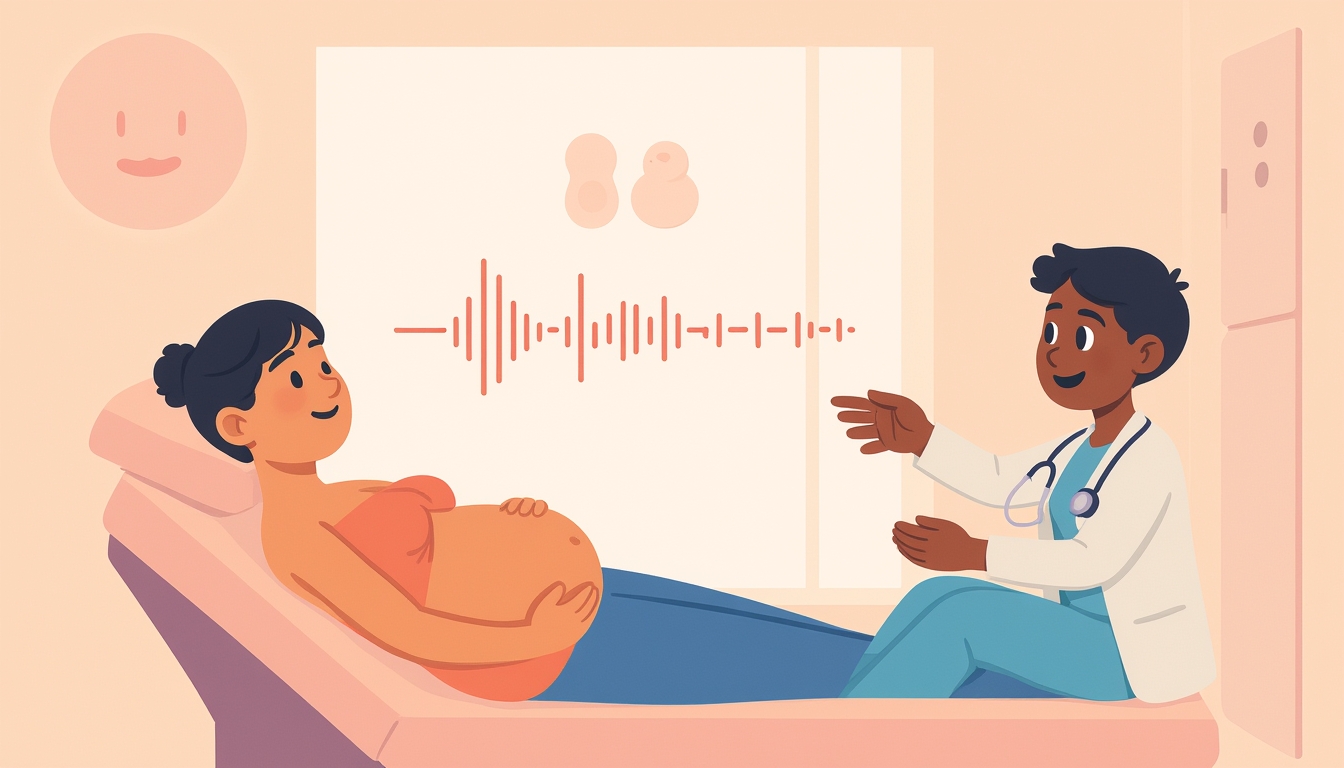
Feeling your heart race before the anatomy scan is incredibly common. You’re not alone if the countdown to your 18–22 week ultrasound brings a blend of excitement and worry. This guide explains what the scan does (and doesn’t) show, why anxiety often rises around this appointment, and evidence-based ways to steady your mind before, during, and after the visit.
Key takeaway: Anatomy scan anxiety is common and manageable. With the right information, support, and coping strategies, you can move through this milestone with more confidence and calm.
1) What Is the Anatomy Scan (18–22 Weeks)?
The second-trimester anatomy scan—sometimes called the mid-pregnancy or anomaly scan—is a detailed ultrasound typically done between 18 and 22 weeks of pregnancy. It’s noninvasive and uses sound waves (not radiation) to create images of your baby and uterus.
What it assesses:
- Baby’s major organs and structures (brain, heart, spine, face, kidneys, stomach, limbs)
- Placenta location and umbilical cord
- Amniotic fluid volume
- Fetal growth measurements and sometimes fetal sex if you want to know
- A trained sonographer performs the scan; images are reviewed by a radiologist, obstetrician, or a maternal-fetal medicine (MFM) specialist when needed.
- It’s a key screening step that can identify many structural differences early, guide follow-up care, and reassure many families when results look typical (Mayo Clinic; ACOG). Ultrasound is widely considered safe in pregnancy when used appropriately.
2) Why Anxiety Happens: Prevalence and Drivers
Anxiety around prenatal testing is common. The American College of Obstetricians and Gynecologists (ACOG) notes that anxiety disorders affect up to 1 in 5 people during pregnancy, and feelings can intensify around key milestones like the anatomy scan (ACOG). In one study, about 23% of participants reported high anxiety before their anomaly scan, with even more reporting heightened state anxiety right before the procedure (PMC).
What drives anatomy scan anxiety?
- Psychological factors: Uncertainty and fear of the unknown—especially the possibility of unexpected findings—fuel worry (Wiley). Misconceptions (e.g., that ultrasound can detect every condition or might harm the baby) can also amplify fear (PMC).
- Physiological factors: Anxiety activates the body’s stress response. While short-term stress is common, persistent high anxiety can be exhausting and may influence health and well-being.
- Social factors: Stories from friends or social media, limited access to accurate information, and lack of support can heighten distress. Conversely, clear communication and supportive partners reduce anxiety (ACOG; PMC).
It’s normal to feel nervous. Anxiety tends to rise before the scan and often eases once you understand the process and have a plan for results.
3) What the Scan Can—and Can’t—Tell You
Setting realistic expectations can dramatically reduce anomaly scan anxiety.
What it can show:
- Many structural differences (e.g., some heart, brain, spine, abdominal wall, and limb differences)
- Placenta position (e.g., low-lying/placenta previa)
- Fetal growth patterns and amniotic fluid levels
- Detect every condition: Some differences are too small, develop later, or are outside ultrasound’s capability. Certain genetic or metabolic conditions won’t show on imaging alone.
- Guarantee outcomes: A normal scan lowers the likelihood of certain structural differences but isn’t a promise about future health.
- Provide instant final answers: Sometimes views are limited (baby’s position, maternal anatomy) and a repeat scan is needed.
- Ultrasound uses sound waves—not ionizing radiation—and has been used in pregnancy for decades when medically indicated. Major organizations consider it safe in routine prenatal care (Mayo Clinic; ACOG). The misconception that ultrasound itself harms the fetus isn’t supported by evidence (PMC).
4) Getting Ready: Steps to Feel More in Control
Practical preparation can bring your nervous system down a notch before the appointment.
- Learn from trusted sources: Read about the second trimester anatomy scan from ACOG, the Mayo Clinic, or your clinic’s materials (ACOG; Mayo Clinic). Understanding purpose and limits reduces fear of the unknown.
- Write down questions: Bring a short list—What will you assess? When and how will I get results? What would trigger a follow-up? Will my partner/support person be allowed in?
- Share your history: If you have prior loss, fertility treatment, or previous complicated scans, tell your clinician and the sonographer. Many teams offer extra sensitivity, pacing, and clear communication when they know your context (Pregnancy After Loss Support).
- Practice relaxation: Try diaphragmatic breathing, body scans, or guided imagery. Even 5 minutes a day helps. Pair your practice with a cue (e.g., brushing teeth) so it’s easy to use during the scan. Evidence-based self-care—including movement, sleep, and nutrition—supports mental health (ACOG).
- Plan support: Decide who will come with you, how you want information shared in real-time, and what you’ll do afterward (a walk, snack, or check-in call) regardless of the news.
5) During the Appointment: Real-Time Coping
- Set communication preferences: At the start, let the sonographer know if you prefer simple explanations as they go or quiet with a summary at the end. Both are valid.
- Ask for plain language: If updates are offered, request short, clear explanations (“That’s the heart’s four chambers; they look as expected”).
- Use grounding techniques: Try a slow exhale twice as long as your inhale (e.g., in for 4, out for 6–8). Relax your jaw and shoulders; keep your gaze soft or close your eyes.
- Lean on your support person: Invite a partner or friend to hold your hand, take notes, and help you ask questions.
- Reframe the silence: Periods of quiet often mean the sonographer is concentrating on measurements—not that something is wrong.
6) Waiting for and Understanding Results
Timelines vary by clinic. Some teams share a preliminary impression immediately; others send results after a radiologist or MFM review. If views were limited, you may be asked to return for additional images.
Coping with uncertainty:
- Before you leave, ask: When and how will we receive results? Who should we call if we don’t hear by that time?
- Request clarity: Ask for a lay summary and written notes. If any measurement is borderline or unclear, ask what that means and what happens next.
- Set a wait plan: Schedule supportive activities during the waiting window—walks, light movement, meal prep, or connecting with a friend. Limit doom-scrolling.
- Name your feelings: Anxiety often eases when you label it (“I’m scared of the unknown”), then pair it with a practical step (“I’ll write down my follow-up questions”).
7) If Results Raise Concerns: Next Steps and Support
If the scan suggests a possible difference, your team will outline a follow-up plan that may include:
- A targeted (level II) ultrasound or fetal echocardiogram with an MFM specialist
- Genetic counseling to discuss options and what findings might mean
- Additional testing such as cell-free DNA screening, diagnostic testing (e.g., amniocentesis), or MRI when appropriate
Helpful questions to ask:
- What exactly was seen, and how certain is the finding?
- What are the possible explanations and next steps?
- What outcomes range from most to least likely?
- What support services are available (social work, counseling, peer groups)?
- Identify one medical contact for questions.
- Ask for written summaries and reputable resources.
- Loop in a mental health professional if anxiety spikes.
- Lean on trusted people and limit unverified online content.
8) Partner Playbook: How to Help and Get Help
Partners often experience their own version of anomaly scan anxiety.
How partners can support:
- Be present: Offer to attend the scan, take notes, and ask the pre-agreed questions.
- Validate emotions: “It makes sense you’re anxious; I’m here with you.” Avoid dismissing or rushing feelings.
- Protect the bubble: Create a calm day around the scan—meals, a walk, no high-stress plans.
- Share load: Handle logistics (appointments, insurance calls) so the pregnant person can focus on self-care.
- Name your own feelings and seek information from the clinical team.
- Consider brief counseling or a support group—your mental health matters, too.
9) When to Seek Professional Care for Anxiety
Reach out to your clinician if you notice:
- Persistent worry most days that’s hard to control
- Sleep disruption, appetite changes, or panic symptoms
- Trouble functioning at work/home or withdrawing from support
- Past anxiety or depression that’s resurfacing
If you’re in crisis or having thoughts of harming yourself or others, seek immediate help. In the U.S., call or text 988 (Suicide & Crisis Lifeline). If outside the U.S., contact local emergency services or use WHO’s mental health resource locator (WHO).
10) How Anxiety Can Affect Pregnancy and Baby—and What Helps
Most people with prenatal anxiety have healthy pregnancies and babies. That said, research links higher, persistent prenatal anxiety with certain risks:
- Maternal mental health: Heightened anxiety can increase risk for depression and traumatic stress, especially after ambiguous or concerning results (PMC; Children’s Mercy Scholarly Exchange).
- Fetal neurodevelopment: Studies associate higher mid-gestation anxiety with differences in offspring brain structure and connectivity; findings are correlational and don’t mean anxiety alone causes harm (PMC; Children’s National).
- Obstetric outcomes: Some research links elevated anxiety with higher risk of preterm birth, low birth weight, or hypertensive disorders like preeclampsia, though results across studies vary (Women’s Mental Health; PMC).
- Early, clear information and timely follow-up reduce uncertainty (Wiley).
- Evidence-based mental health care (CBT/IPT), social support, healthy sleep, movement, and stress-reduction practices improve well-being (ACOG; Mayo Clinic).
- Partner and peer support, plus non-directive counseling, help families navigate complex decisions when needed (Cleveland Clinic).
11) Trusted, Evidence-Based Resources
- ACOG: Anxiety and Pregnancy (symptoms, treatment, when to seek help) — https://www.acog.org/womens-health/faqs/anxiety-and-pregnancy
- Mayo Clinic: 2nd trimester pregnancy overview, including ultrasounds — https://www.mayoclinic.org/healthy-lifestyle/pregnancy-week-by-week/in-depth/pregnancy/art-20047732
- WHO: Perinatal mental health resources — https://www.who.int/teams/mental-health-and-substance-use/promotion-prevention/maternal-mental-health
- MMHLA: Guidance on screening for anxiety/depression in pregnancy — https://www.mmhla.org/articles/new-national-guidance-on-screening-for-anxiety-and-depression
- Pregnancy After Loss Support (for those with prior loss) — https://pregnancyafterlosssupport.org/managing-anxiety-anatomy-scan-ultrasound/
- Cleveland Clinic Fetal Care Center (information on non-directive counseling and specialist care) — https://my.clevelandclinic.org/pediatrics/departments/fetal-care
- Pre-scan anxiety prevalence and misconceptions — https://pmc.ncbi.nlm.nih.gov/articles/PMC8618206/
- Importance of information and timely results — https://obgyn.onlinelibrary.wiley.com/doi/10.1111/aogs.14288
- Maternal anxiety and child brain development — https://pmc.ncbi.nlm.nih.gov/articles/PMC2795128/ and https://www.childrensnational.org/about-us/newsroom/2020/maternal-anxiety-fetal-brain
- Psychological impact of fetal anomaly diagnosis — https://scholarlyexchange.childrensmercy.org/papers/6312/
- Potential links with obstetric outcomes — https://womensmentalhealth.org/posts/anxiety-during-pregnancy-how-does-it-affect-the-developing-fetal-brain/ and https://pmc.ncbi.nlm.nih.gov/articles/PMC10004293/
Conclusion: You’re Allowed to Feel Everything—and Ask for What You Need
Anatomy scan anxiety doesn’t mean you’re doing pregnancy “wrong.” It means you care deeply in a moment with unknowns. Build your plan: learn what to expect, set communication preferences, practice a few calming techniques, and line up support for the wait.
If worry lingers or escalates, ask your clinician about screening and referral options—effective, safe treatments are available in pregnancy. You deserve clear information, compassionate care, and a calmer second trimester.
Next step: Write down three questions for your care team and one coping strategy you’ll use on scan day. Share them with your support person today.